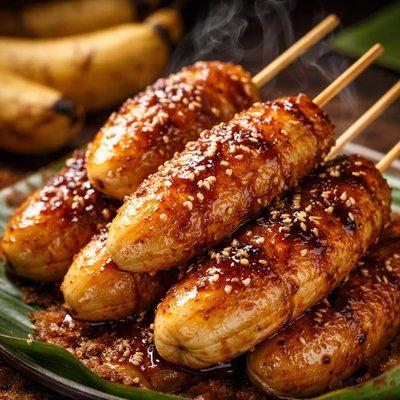
One of the Philippines’ most beloved street food snacks is also one of its simplest: Banana-Q. Made from locally popular Saba bananas, deep-fried to golden perfection, coated in caramelized brown sugar, and served on bamboo skewers, this sweet Filipino treat has remained a street food favorite for generations.
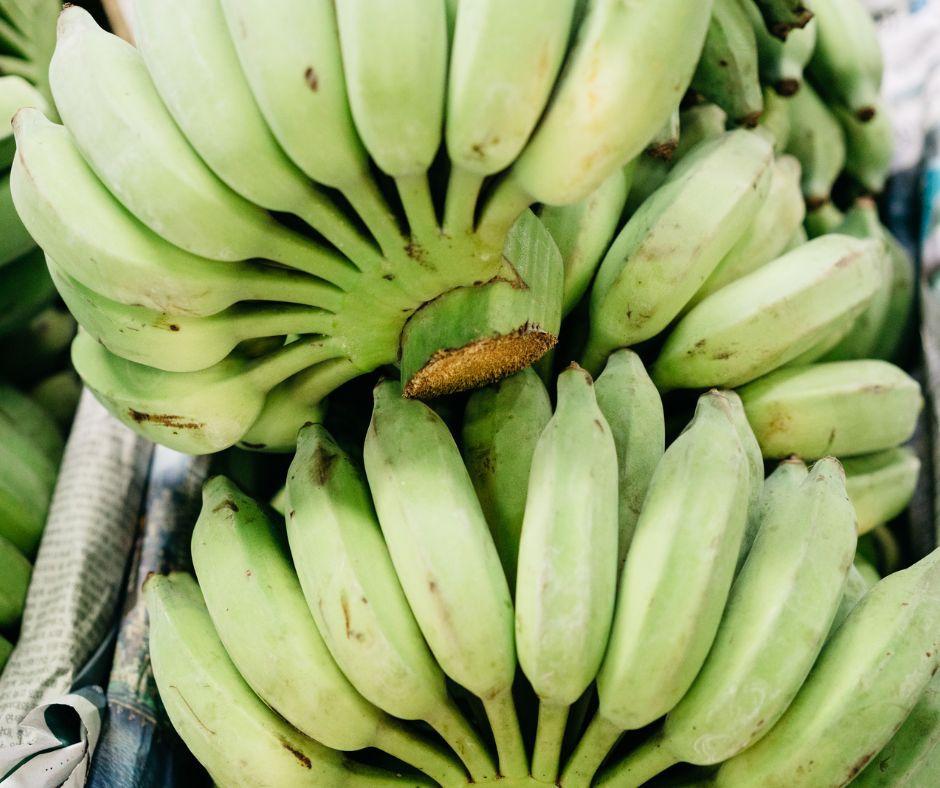
The star ingredient is the Saba banana, an important cooking banana variety widely grown and enjoyed in the Philippines. Although it can be eaten raw, Saba is more commonly used in Filipino cooking, much like plantains in other cuisines. Its thick skin, firm texture, and starchy white flesh make it ideal for frying, boiling, grilling, and incorporating into traditional Filipino dishes.
But perhaps one of the most popular ways Filipinos enjoy Saba bananas is by turning them into Banana-Q!
What Is Banana-Q?
The name Banana-Q comes from the combination of “banana” and “barbecue.” Similar to meat barbecue or kebabs, the cooked bananas are threaded onto bamboo skewers, making them easy to hold and enjoy on the go.
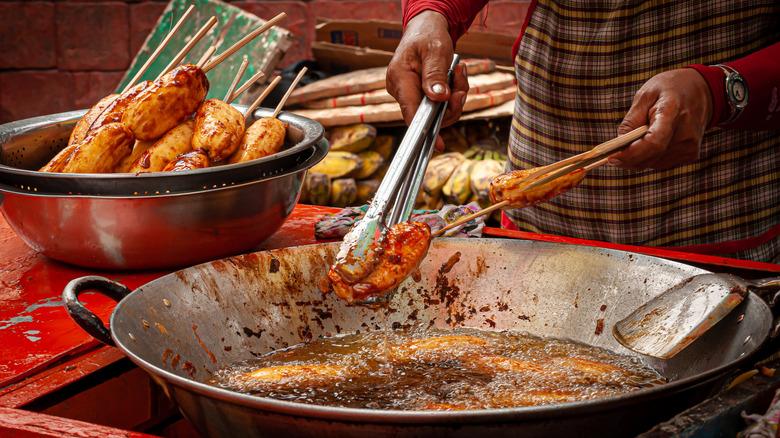
To prepare Banana-Q, peeled Saba bananas are deep-fried in hot oil until they develop a golden exterior. Brown sugar is then added to the cooking oil, coating the bananas in a sweet, caramelized glaze. Once cooked, the bananas are placed on bamboo sticks, usually in portions of two or three.
The result? A delicious combination of a soft, starchy banana center and a sweet, slightly crunchy, caramelized coating. Best enjoyed freshly cooked and still warm!
A Filipino Street Food Favorite
Banana-Q is more than just a quick afternoon snack. It is part of everyday Filipino food culture.
Whether you’re walking through a busy city street, visiting a small neighborhood village, or passing through a provincial town, chances are you’ll find a roadside vendor or a small local store selling freshly cooked Banana-Q. The familiar sight of bananas sizzling in a large pan of hot oil, with brown sugar bubbling around them, is enough to tempt anyone passing by.
One of the best things about Banana-Q is its affordability. Made with simple and readily available ingredients, it has long been an accessible treat for students, workers, families, and just about anyone craving something sweet.
Traditionally, Banana-Q is enjoyed with a glass of water, although some people today prefer pairing it with a cold soft drink. Either way, it remains a satisfying snack that doesn’t require an expensive trip to a restaurant or café.
Different Takes on a Filipino Classic
Although the basic preparation remains relatively consistent, Banana-Q can have slight variations depending on the province or the vendor making it.
Some preparations feature a thicker caramelized sugar coating, while others may use additional sweeteners or different cooking techniques to achieve a richer flavor and texture. Regional interpretations of Filipino banana snacks also include other preparations using Saba, such as Turon and Minatamis na Saging.
Regardless of the variation, the idea remains simple: delicious Saba bananas transformed into a sweet, satisfying treat.
Why Banana-Q Remains a Filipino Favorite
In a world where convenience and instant food have become part of everyday living, Banana-Q continues to hold its place among the Philippines’ favorite street food snacks.
Despite the growing influence of international food trends and Western fast-food culture, this humble banana treat has never lost its appeal. It represents something deeply familiar to Filipinos: the ability to turn simple local ingredients into something delicious, affordable, and comforting.
For many, Banana-Q brings back memories of childhood afternoons, neighborhood vendors, school-day snacks, and the familiar aroma of freshly fried bananas along the streets.
It is a reminder that not everything needs to be complicated or instant to be enjoyed. Sometimes, the best food experiences come from simple ingredients, traditional cooking methods, and a little Filipino ingenuity.
So, the next time you see a vendor selling golden, sugar-coated bananas on bamboo sticks, don’t just think of it as another banana snack.
It’s not just a banana. It’s Banana-Q!
Frequently Asked Questions About Banana-Q
1. What is Banana-Q in the Philippines?
Banana-Q, also spelled Banana Cue or Banana-Cue, is a popular Filipino street food made from Saba bananas that are deep-fried and coated in caramelized brown sugar before being served on bamboo skewers.
2. What type of banana is used for Banana-Q?
Banana-Q is traditionally made using Saba bananas, a firm and starchy cooking banana widely used in Filipino cuisine.
3. Why is it called Banana-Q?
The name combines “banana” and “barbecue.” Similar to Filipino barbecue, the cooked bananas are placed on bamboo skewers for convenient serving.
4. When do Filipinos usually eat Banana-Q?
Banana-Q is commonly enjoyed as an afternoon snack or merienda. It is widely sold by street vendors, neighborhood stores, and local food stalls throughout the Philippines.
5. What is the difference between Banana-Q and Turon?
Banana-Q consists of whole Saba bananas fried with caramelized brown sugar and served on skewers. Turon, on the other hand, typically features sliced Saba bananas wrapped in a thin spring-roll wrapper, often with added ingredients such as jackfruit, before being fried.
If you enjoyed the bits of information about banana-q and wants to read more from The Mixed Culture, make sure to subscribe to my mailing list to read my latest blog straight from your inbox. Or, follow me on Facebook or Instagram for the latest scoop from me. Feel free to email me for any questions or comment below.
Con mucho amor,
Imelda❤

