
Aside from rocking that iconic unibrow—which certainly makes Frida Kahlo stand out at first glance (no pun intended!)—I think she was one seriously badass woman.
My admiration for Frida goes beyond her striking paintings and unmistakable artistic style. What fascinates me is the woman behind the canvas: her courage, individuality, creativity, and determination to express herself despite the physical pain and personal challenges that shaped much of her life.
Frida was unconventional, unapologetic, and never particularly interested in fitting into anyone else’s idea of who she should be. She turned deeply personal experiences into art that continues to resonate with people around the world. Her work explored identity, love, pain, womanhood, Mexican culture, and the complexities of being human.
And that is what makes her so compelling to me.

Who Was Frida Kahlo?
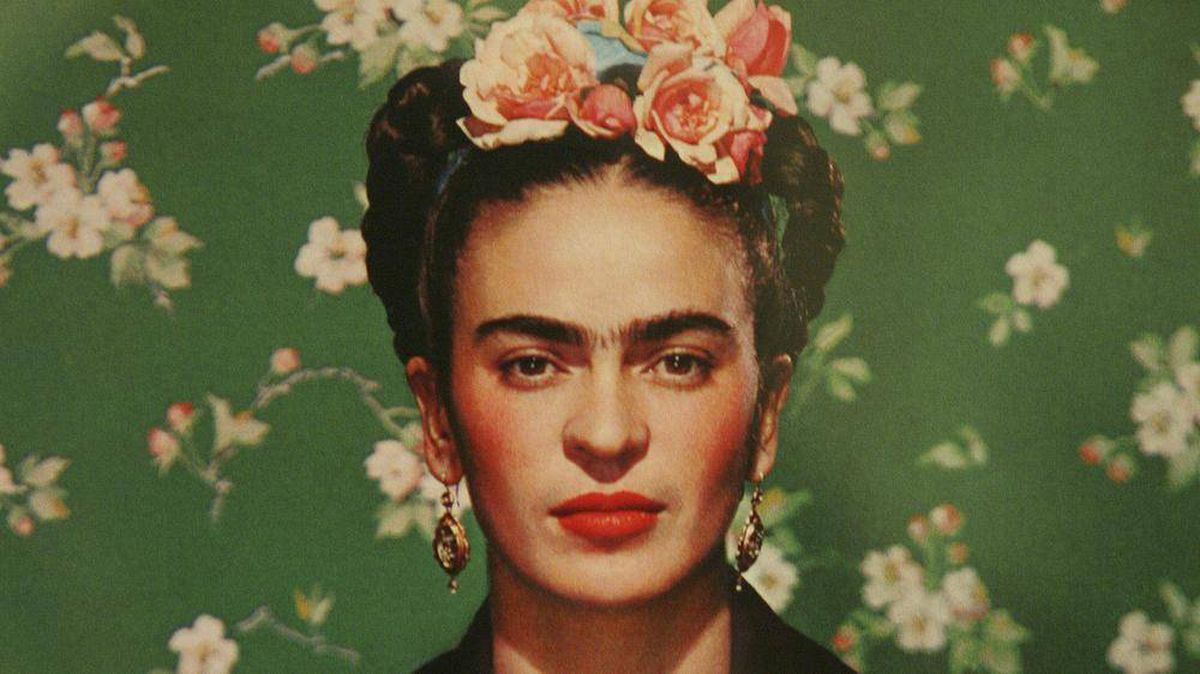
Born in Coyoacán, Mexico City, in 1907, Frida Kahlo was a Mexican painter best known for her self-portraits and deeply personal artworks.
Her life was marked by significant physical challenges. At the age of six, she contracted polio, which affected her right leg. Then, when she was 18, she was involved in a devastating bus accident that left her with multiple serious injuries, including damage to her spine and pelvis. The accident led to years of medical treatment, surgeries, and chronic pain.
During her recovery, Frida began painting. What started as a way to occupy herself while confined to bed eventually became her life’s work.
Her paintings often drew from her own experiences, emotions, and surroundings. Although her work is frequently associated with Surrealism, Frida famously resisted the label. She explained that she painted her own reality rather than dreams.
Her relationship with fellow Mexican artist Diego Rivera was another defining part of her life. Their marriage was passionate and complicated, marked by infidelity, separation, divorce, and remarriage. Frida also experienced profound personal and reproductive struggles, which found expression in some of her most intimate works.
Yet, she continued to create.
I admire how she refused to let other people’s expectations define her. Her work challenged conventional ideas about beauty, femininity, identity, and the female experience. She made space for herself through her art, her appearance, her politics, and the way she chose to live.
Frida’s influence extends far beyond the art world. She has become an enduring cultural figure whose work and individuality continue to inspire conversations about identity, self-expression, and representation.

My Solo Travel Mission: Finding Frida Kahlo’s House in Mexico City
Frida inspired me in so many ways, and that admiration eventually led me to find my way to her home—quite literally!
During one of my solo trips to Mexico City, I made it my personal mission to visit La Casa Azul, or the Blue House, the place where Frida was born, lived for much of her life, and created many of her works.

La Casa Azul is located in Coyoacán, a historic neighbourhood in the southern part of Mexico City. It is now the Museo Frida Kahlo, one of the city’s most popular cultural attractions.
Of course, I could have joined a guided tour or taken the tourist double-decker bus. But where would the adventure be in that?
I wanted to find it on my own.
So, off I went to Coyoacán, Ciudad de México!
I took Mexico City’s public transportation, travelling by metro and local minibus alongside commuters during rush hour. It was an interesting experience, navigating the city and figuring things out as I went. There is something rewarding about exploring a place independently, especially when you’re travelling solo.
Would I do it again? Absolutely!

Visiting La Casa Azul: Inside Frida Kahlo’s Blue House
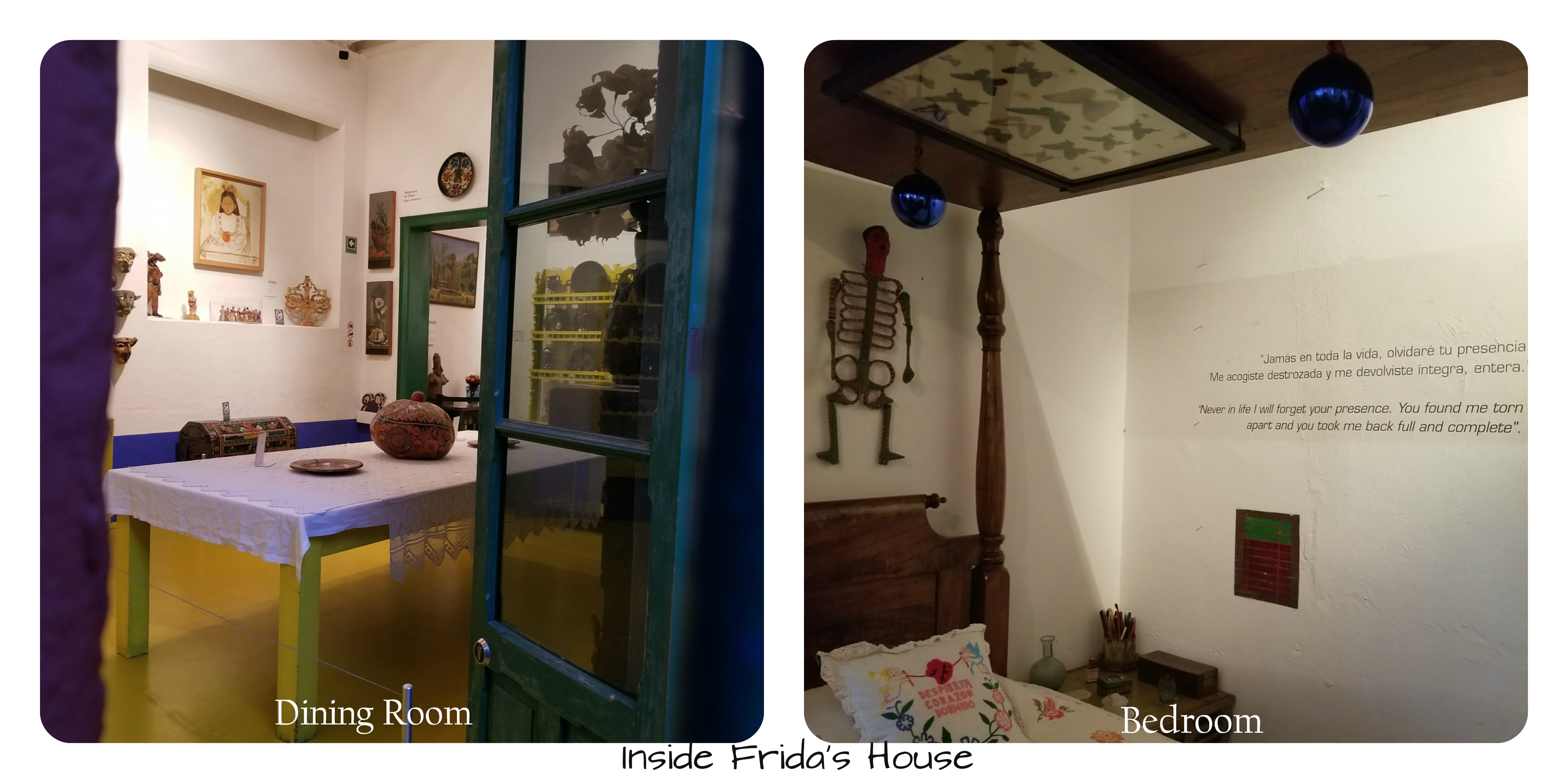
If you’re a Frida Kahlo admirer, visiting La Casa Azul is an especially meaningful experience.
The bright blue house offers a glimpse into Frida’s personal world. Rather than simply displaying paintings in a conventional gallery setting, the museum preserves the atmosphere of the home she shared with her family and, at different times, Diego Rivera.
Inside, you’ll find personal belongings, photographs, clothing, artworks, furniture, and objects that reveal more about her everyday life and creative environment.
One of the most memorable spaces is her bedroom, where her iconic bed and the mirror arrangement associated with her self-portraits offer a glimpse into how she continued painting during periods when illness and injury kept her confined.
Walking through the rooms, I found myself thinking about how much of Frida’s life was reflected in her art. Her paintings were not simply beautiful compositions of vivid colours and intriguing imagery. They were deeply personal expressions of her experiences, dreams, relationships, and physical and emotional pain.
You begin to understand that, for Frida, art and life were inseparable.
La Casa Azul – Museo Frida Kahlo
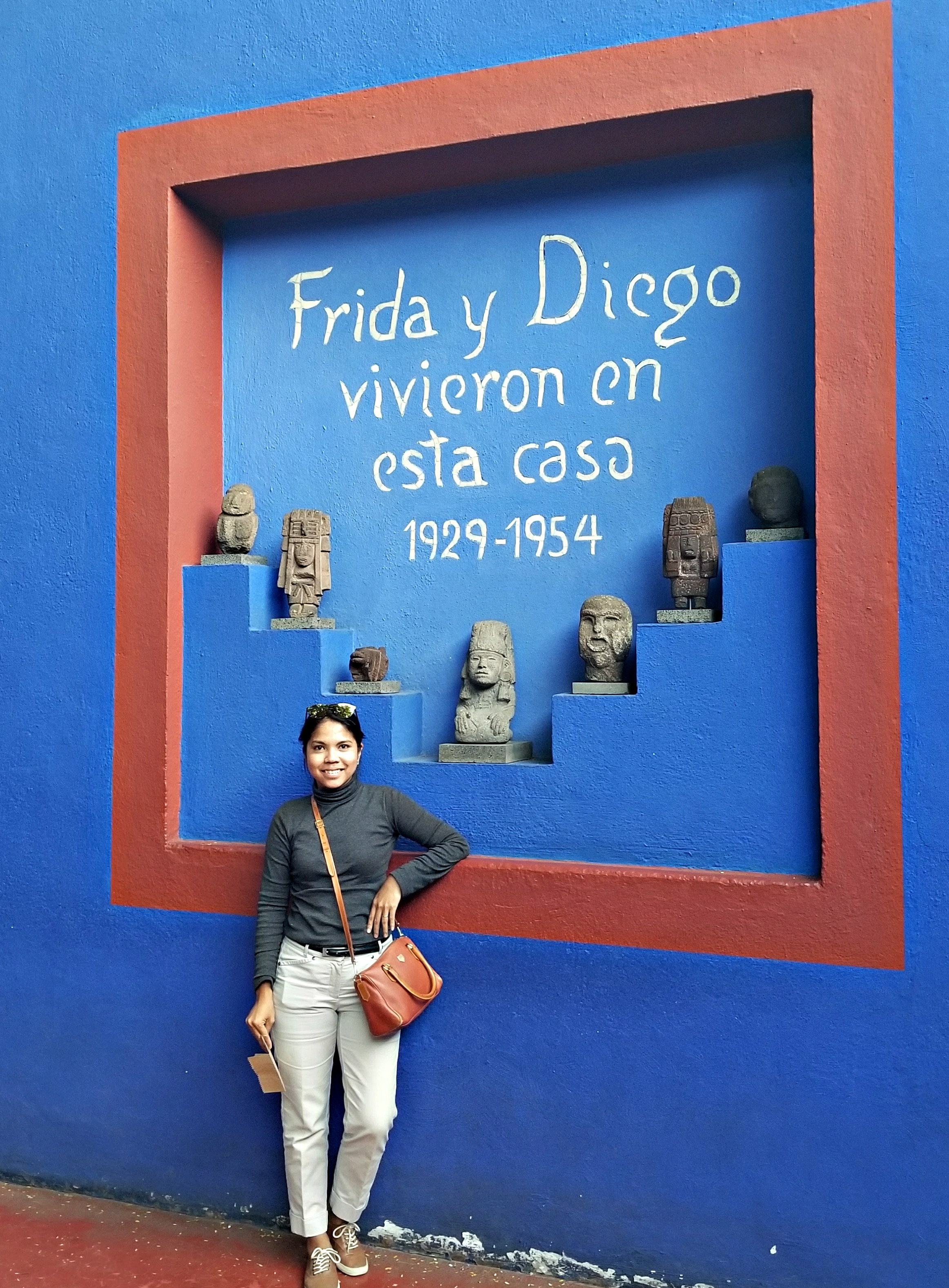
What I loved most about the visit was the feeling of being in a place that was so closely connected to the artist I admired. It was more intimate than looking at her paintings in a museum halfway across the world. Here, I could see the environment in which she lived and worked, and get a sense of the person behind those iconic self-portraits.
For someone who appreciates unconventional beauty, individuality, and the courage to live authentically, La Casa Azul was a real treat.
Frida challenged expectations through her art and the way she presented herself to the world. She made her individuality part of her identity and created a body of work that continues to speak to different generations.

“Cada tic-tac es un segundo de la vida que pasa, huye, y no se repite. Y hay en ella tanta intensidad, tanto interés, que el problema es solo saberla vivir. Que cada uno lo resuelva como pueda”. – Frida Kahlo
Visiting the Frida Kahlo Museum: Practical Tips
If you’re planning to visit La Casa Azul during your trip to Mexico City, here are a few things worth keeping in mind.
Book your tickets in advance. The museum is extremely popular. Check the official website and reserve your preferred date and time before visiting.
Check the opening schedule. Opening hours and special closures can change, so verify the latest information before your trip.
Allow time to explore. The museum includes several rooms, personal collections, and outdoor spaces. Give yourself enough time to appreciate the house rather than rushing through it.
Expect other visitors. La Casa Azul is a popular attraction, and some rooms can feel crowded, particularly during busy periods.
Respect the museum’s photography rules. Check the current guidelines for photography and follow any restrictions posted inside.
Official website: Museo Frida Kahlo – La Casa Azul
A Visit I’ll Always Remember
My visit to La Casa Azul was more than just ticking another tourist attraction off my Mexico City itinerary. It was a chance to connect with the life and work of a woman whose individuality and creativity I have long admired.
Frida’s story reminds me that our experiences, even the difficult ones, can shape how we see the world and express ourselves. She did not have an easy life, nor did she try to present herself as someone who did. Instead, she created art that was honest, personal, and unmistakably her own.
And perhaps that is what makes her legacy so powerful.
I left La Casa Azul with an even greater appreciation for Frida—not just the artist with the famous unibrow, but the woman who dared to be herself.
¡Viva Frida!
If you’ve been following The Mixed Culture, you know I’m just an email away if you have questions or need travel tips. And if you’ve stumbled upon my blog for the first time, welcome! Feel free to contact me or leave a comment below.
Make sure to subscribe to my mailing list or follow The Mixed Culture on Facebook to follow my latest adventures.
Con mucho amor,
Imelda ❤
Frida Kahlo Museum and La Casa Azul: Quick Guide and FAQs
Answer-first summary
The Frida Kahlo Museum, also known as La Casa Azul (The Blue House), is located at Londres 247 in the Coyoacán neighbourhood of Mexico City, Mexico. It was Frida Kahlo’s family home and is now a museum dedicated to her life, art, and personal history. Visitors can explore preserved rooms, personal belongings, photographs, artworks, and objects connected to the Mexican artist. Advance online ticket booking is required under the museum’s current visitor policy.
La Casa Azul at a Glance
| Detail | Information |
|---|---|
| Museum name | Museo Frida Kahlo |
| Common name | La Casa Azul (The Blue House) |
| Location | Londres 247, Colonia del Carmen, Coyoacán, Mexico City, Mexico |
| Country | Mexico |
| Artist | Frida Kahlo |
| Born | July 6, 1907 |
| Died | July 13, 1954 |
| Museum opened | 1958 |
| Main focus | Frida Kahlo’s life, art, home, and personal belongings |
| Ticketing | Advance online booking; no in-person ticket sales under current policy |
| Official website | https://www.museofridakahlo.org.mx/ |
Frequently Asked Questions
1. Where is Frida Kahlo’s house?
Frida Kahlo’s former home, La Casa Azul, is located at Londres 247 in Colonia del Carmen, Coyoacán, Mexico City, Mexico.
2. What is La Casa Azul?
La Casa Azul, meaning The Blue House, is the family home where Frida Kahlo was born and lived for much of her life. It is now the Museo Frida Kahlo, a museum dedicated to her life and legacy.
3. What can you see inside the Frida Kahlo Museum?
Visitors can explore rooms of the former family home, personal belongings, photographs, clothing, furniture, artworks, and other objects connected to Frida Kahlo’s life. The museum also offers insight into her creative environment and Mexican cultural influences.
4. Why is Frida Kahlo famous?
Frida Kahlo is known for her self-portraits and deeply personal paintings exploring identity, physical and emotional pain, relationships, gender, and Mexican culture. Her distinctive appearance, artistic individuality, and cultural influence have made her one of Mexico’s most recognizable artists.
5. Was Frida Kahlo a Surrealist?
Frida Kahlo is frequently associated with Surrealism because of the dreamlike and symbolic elements in some of her paintings. However, she resisted being categorized as a Surrealist and explained that her work represented her own reality and experiences.
6. Did Frida Kahlo live in La Casa Azul?
Yes. La Casa Azul was her family home, where she was born and spent much of her life. She and Diego Rivera also made it their home during parts of their relationship. It became a museum in 1958.
7. Do you need to book tickets for the Frida Kahlo Museum?
Yes. The museum’s current official visitor information states that tickets are not sold in person at the museum. Visitors should purchase tickets online through the official ticketing website before arriving.
8. Where is Coyoacán in Mexico City?
Coyoacán is a historic borough in the southern part of Mexico City. It is known for its historic streets, markets, cultural attractions, and connection to Frida Kahlo.
9. Can you take photographs inside La Casa Azul?
The museum currently permits personal photography using mobile devices without flash, subject to its visitor rules. Visitors should check the official photography policy before their visit.