

Photo credit : http://mattersmost.deviantart.com
The Philippines is known for its rich culture, colorful traditions, and strong sense of community. Among the many Filipino values that have endured through generations, one stands out as a beautiful expression of unity, cooperation, and compassion: the Bayanihan spirit.
Pronounced buy-uh-NEE-hun, Bayanihan is a Filipino tradition rooted in the idea of helping one another, working together, and contributing to the well-being of the community without expecting anything in return.
Derived from the Filipino word bayan, which means town, community, or nation, Bayanihan is commonly understood as the spirit of communal unity and cooperation. It reflects the belief that people can accomplish more when they come together and support one another.
The Origin of Bayanihan: A Community Coming Together
The traditional concept of Bayanihan can be traced to rural Filipino communities, where cooperation among neighbors was an essential part of everyday life.
One of the most recognized examples of this tradition was the communal effort of moving a family’s entire house to a new location.
Imagine a traditional Filipino Bahay Kubo—a modest house built using indigenous materials such as bamboo, nipa, and other locally available resources. Unlike modern concrete houses, these lightweight structures could be relocated when a family needed to move.
Rather than hiring professional movers, the family would call upon their neighbours for help. Men from the community would gather to lift and carry the house together.
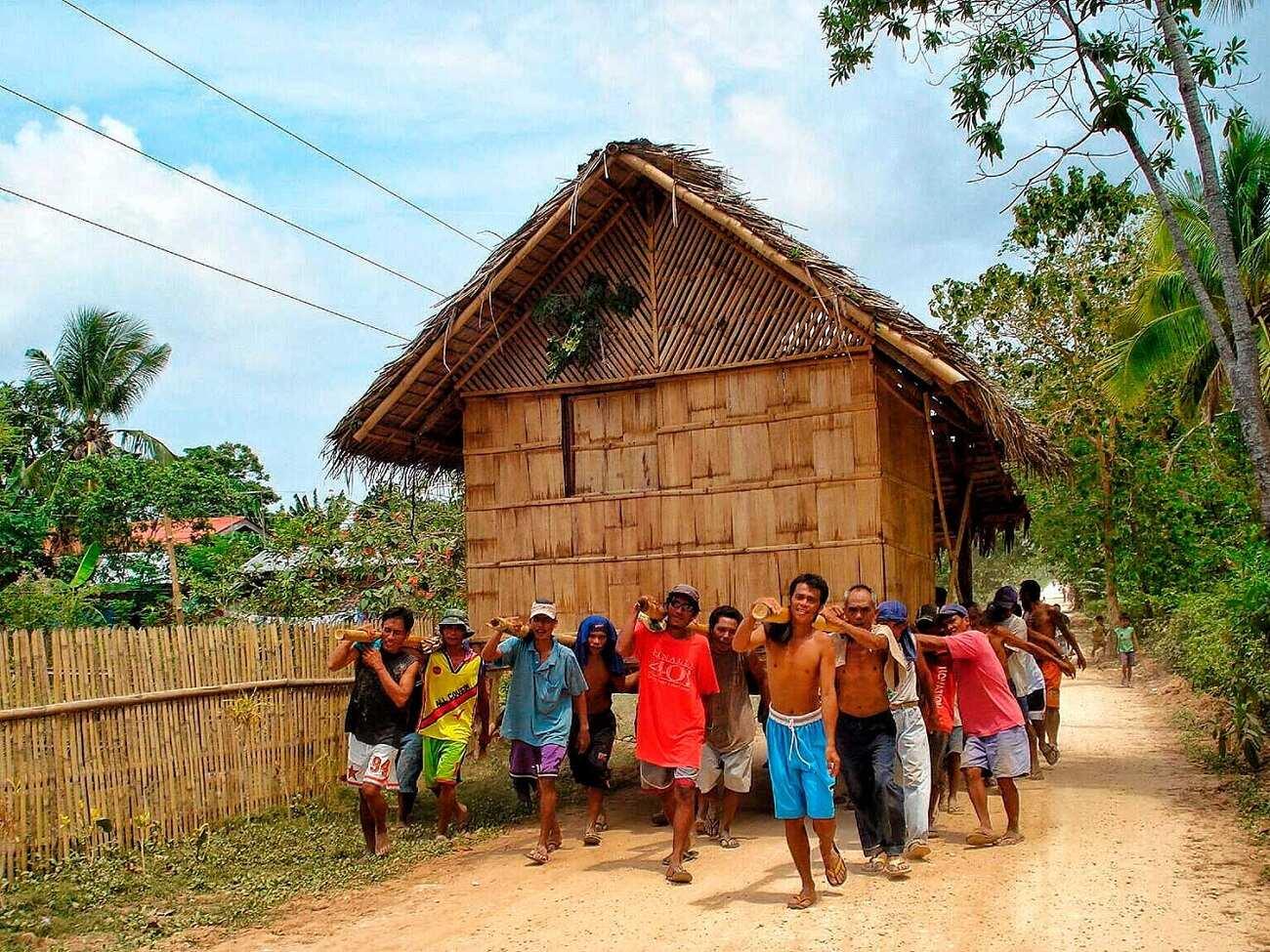
To make the relocation possible, long bamboo poles were positioned underneath the house, both lengthwise and crosswise. Around 15 to 20 volunteers, depending on the size and weight of the structure, would then lift the bamboo poles onto their shoulders.

Photo credit: http://en.wikipedia.org/wiki/Communal_work
With everyone working in unison, the group would carefully carry the entire house toward its new location.
It was a remarkable demonstration of teamwork, coordination, and community spirit. Each person shared the responsibility, making what would otherwise be an almost impossible task achievable through collective effort.
As a gesture of appreciation, the family would prepare food and refreshments for everyone who participated in the move.
This traditional practice became one of the most recognizable representations of Bayanihan: neighbors helping neighbors, sharing the workload, and celebrating the accomplishment together.
What Does the Bayanihan Spirit Mean to Filipinos?
Bayanihan represents much more than physically helping someone move a house. It reflects a deeply rooted Filipino value of helping others, especially during difficult times.
For Filipinos, helping a kabayan (fellow Filipino) is an expression of compassion, generosity, and solidarity. Whether lending a hand to a neighbor, sharing food with someone in need, or volunteering time and resources for a community project, the Bayanihan spirit encourages people to look beyond themselves and contribute to the greater good.
At its heart, Bayanihan is about helping without expecting anything in return. It is about recognizing that everyone has a role to play in building a stronger and more supportive community.
It also reflects the Filipino belief that no one should have to face life’s challenges alone.
This beautiful mentality of cooperation and shared responsibility is one of the many values that Filipinos carry with pride, wherever they may be.
Bayanihan in Modern Filipino Society
Although the traditional practice of carrying an entire house may be less common today, the Bayanihan spirit remains very much alive in Filipino communities.
In modern times, it has evolved into different forms of community support, volunteerism, and collective action.
One of the most visible examples is during natural disasters and emergencies. The Philippines regularly experiences typhoons, floods, earthquakes, and other calamities. When communities are affected, Filipinos often come together to provide assistance to those who have lost their homes, belongings, or livelihoods.
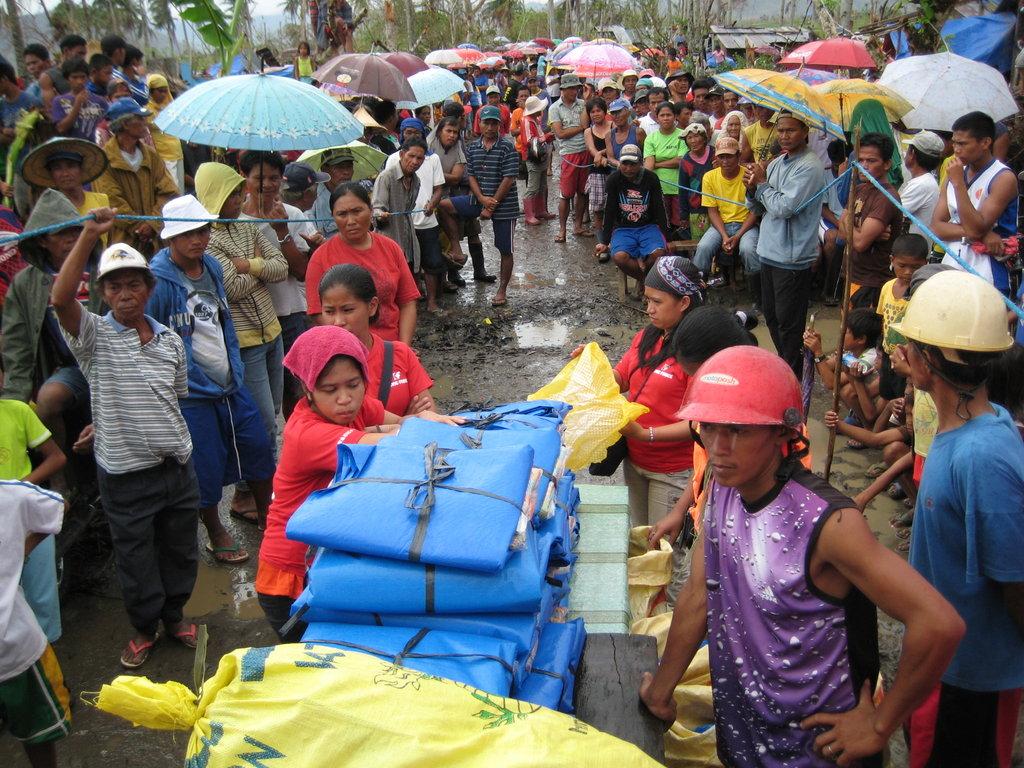
From organizing relief operations and collecting donations to preparing meals, distributing essential supplies, and helping rebuild damaged homes, volunteers demonstrate the same spirit of cooperation that characterized traditional Bayanihan.
The spirit can also be seen in community pantries, neighborhood initiatives, fundraising activities, and grassroots organizations that bring people together to help those in need.
Whether through a large community effort or a simple act of kindness, Bayanihan continues to demonstrate that helping one another is an important part of Filipino culture.
The Bayanihan Spirit Beyond the Philippines
The Bayanihan spirit is not limited to the Philippines. It continues to thrive among Filipinos living and working abroad.
Across the world, Filipino communities organize fundraising activities, cultural events, charitable initiatives, and volunteer programs to support fellow Filipinos and their local communities.
Whether in Canada, the United States, the Middle East, Europe, or elsewhere, Filipinos continue to demonstrate their willingness to help one another, especially when a kabayan faces hardship.
For many overseas Filipinos, Bayanihan is also a way of staying connected to their roots. It serves as a reminder that even when they are far from home, the values they grew up with remain part of who they are.
It is this sense of belonging, compassion, and shared responsibility that allows the Bayanihan spirit to transcend geographical boundaries and generations.
Bayanihan: A Filipino Tradition Worth Preserving
The traditional image of villagers carrying a Bahay Kubo on bamboo poles may have become less familiar in today’s modern society, but the meaning behind it remains relevant.
Bayanihan reminds us that even the biggest challenges become easier when people work together. It teaches us the importance of generosity, cooperation, and being present for others, especially when help is needed most.
It is a beautiful reflection of the Filipino character: resilient, compassionate, resourceful, and community-minded.
The Bayanihan spirit is one of the many beautiful things that Filipinos can call their own and proudly share with the world. It is more than a tradition passed down through generations; it is a way of life that reminds us that together, we can accomplish more.
If enjoyed reading this, make sure to subscribe to my mailing list to read my latest blog straight from your inbox. Or, follow me on Facebook or Instagram to know the latest scoop from The Mixed Culture. For any questions, click on the “contact us” on top to email me or comment below.
Hasta la próxima amigos!
Love,
Imelda♥


I heard the word “Bayanihan” on the radio from the Japanese woman who is living in Bulacan today.
She is under community quarantine from the new coronavirus and said she hasn’t left home for a few weeks.
She said she feels anxious now but on the other hand, she never feels isolation as Filipino people have the Bayanihan spirit and help each other.
I thought we should have the same spirit even in Japan as we are in the same situation right now.
Thanks for sharing the beautiful word.
This is nice to hear Makoto! We hope that she is well now and been taken care of the Filipinos there
This is a good contribution that I can share during my morning talk with my colleagues.